
The Difference Between Rest and Collapse


At first glance, rest and collapse can look very similar.
In both cases, we stop moving.We sit down.We scroll.We lie on the couch.We try to “turn off” for a while.
But many people have experienced this strange feeling:
You spend hours supposedly resting…and somehow still don’t feel restored afterward.
That’s because rest and collapse aren’t always the same thing.
What Collapse Often Looks Like
Collapse usually happens after we’ve pushed ourselves beyond our capacity for too long.
It’s the moment when the body says:
“I can’t keep this pace anymore.”
Collapse can look like:
zoning out for hours
endlessly scrolling your phone
feeling mentally numb
lying down but still feeling agitated
exhaustion without actual relief
There’s often a sense of depletion underneath it.
The nervous system isn’t truly settling—it’s simply running out of energy.
Why Real Rest Can Feel Different
True rest tends to feel more intentional and supportive.
Not necessarily productive.Not performative.Not something you have to “earn.”
Just supportive.
Real rest often allows the body to gradually soften instead of simply shutting down.
You may notice:
deeper breathing
less bracing in the muscles
a quieter mental state
a feeling of being more present afterward
The difference is subtle, but important.
Collapse often disconnects us from ourselves.
Rest tends to reconnect us.
Why Many People Struggle to Rest
For people who are constantly busy, overstimulated, or emotionally responsible for others, slowing down can feel surprisingly difficult.
The nervous system becomes accustomed to:
constant input
multitasking
movement
pressure
staying mentally alert
When that becomes your baseline, stillness can initially feel uncomfortable—even when you desperately need it.
This is one reason people often say:
“I don’t know how to relax.”
“I feel guilty resting.”
“I’m exhausted, but I can’t turn my brain off.”
The body has learned momentum.
And momentum doesn’t stop instantly just because you finally sit down.
Rest Isn’t Just the Absence of Activity
One of the biggest misconceptions about rest is that it simply means “doing nothing.”
But nervous system restoration usually involves more than stopping activity.
It often requires:
support
safety
slower transitions
physical softening
reduced stimulation
This is why some forms of rest feel more replenishing than others.
Passive scrolling may temporarily distract the mind…while supportive practices often help the body actually release tension.
Practices That Help the Body Shift
Supportive, slower-paced practices can help bridge the gap between constant activity and genuine rest.
This might include:
quiet walks without stimulation
These practices work not because they force relaxation, but because they help create conditions where the nervous system can begin to settle naturally.
Why Support Matters
Many people discover that their body relaxes more deeply when they don’t have to hold everything themselves.
In restorative yoga, props support the body completely.
In assisted stretching, someone else guides the movement so you’re not managing the stretch on your own.
These experiences can interrupt the constant sense of effort many people carry throughout the day.
And sometimes that’s exactly what the body needs:not more discipline,but more support.
Rest Is Not Something You Have to Earn
In a culture that constantly emphasizes productivity, rest often becomes tied to accomplishment.
We tell ourselves:
“I’ll rest when everything is done.”
“I should be doing something useful.”
“I haven’t earned a break yet.”
But bodies aren’t machines.
Rest is not a reward for exhaustion.
It’s part of how the nervous system stays regulated, resilient, and healthy in the first place.
Learning the Difference
If you’ve been feeling constantly tired, emotionally overloaded, or physically tense, it may be worth asking:
Does my body actually feel restored after I rest?
Or am I simply collapsing from overstimulation?
That awareness alone can begin to shift the way you care for yourself.
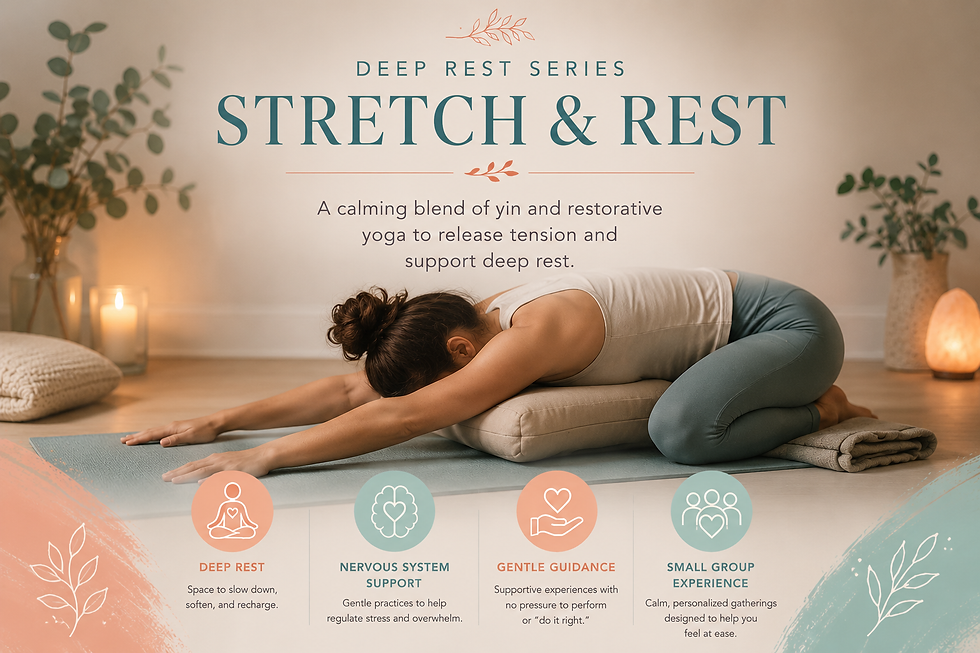
Creating Space for Real Rest
Practices that emphasize support, slowness, and nervous system regulation can help the body reconnect with a deeper kind of rest—one that feels grounding rather than numbing.
If you’re looking for a gentler way to release tension and slow down, you can explore supportive offerings like assisted stretching and restorative yoga here:


Comments